As summer approaches, you may be thinking about turning your backyard barbecue into your dream cooking and entertaining center. There’s an abundance of outdoor options, from simple surrounds for a basic grill to islands so tricked-out that you’d have trouble telling them from indoor ones unless you looked up and saw the sun or moon.
Where to start? We break down the decisions to help you determine what would best fit your lifestyle and budget.
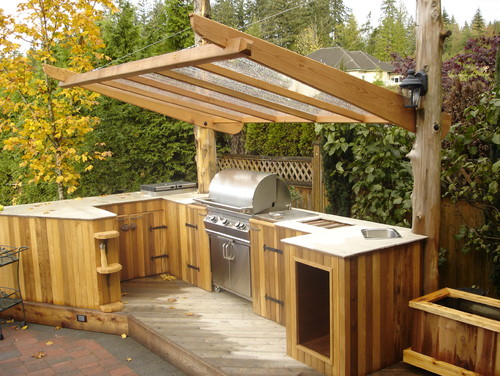
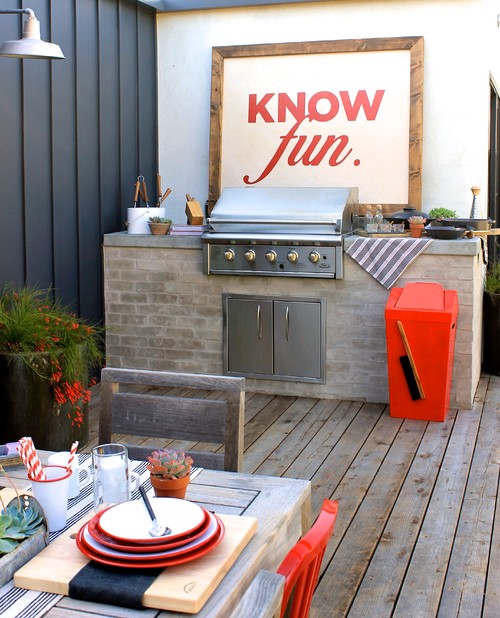
To help you construct a space that makes sense for your lifestyle, ask yourself:
- Do you regularly entertain outside and have a climate that permits it? For instance, if you barbecue outside only on the Fourth of July and maybe for one other social function a year, it doesn’t make sense to have a fancy, large outdoor kitchen with a lot of accessories.
- Do you see yourself still using your indoor kitchen to do your prep? If you’re looking just to cook outside, then something simple is best. All you need is a little counter space for prep plus easy access to your indoor kitchen.
But if you’re truly interested in entertaining and using your outdoor kitchen as a full-service operation, then you’ll want to consider a bigger prep space and features like an outdoor refrigerator, sink, storage space and a bar or proximity to an entertaining or eating area.
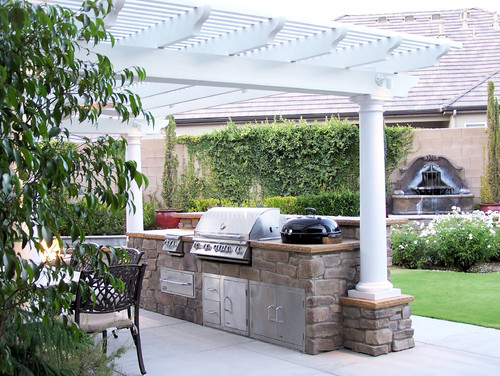
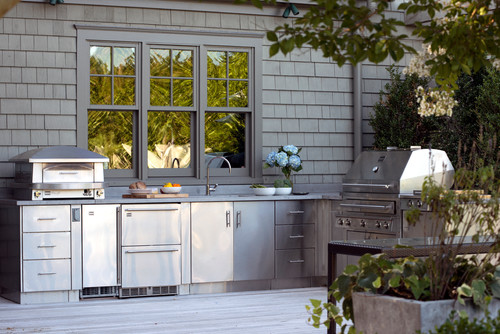
Locating the kitchen close to the house will reduce the price of pulling electrical, water and gas lines to a more remote part of your yard. Expect to pay about $12 a foot to bring a gas line out to the site and another $8 a foot for electrical.

Handy homeowners, may be able to create an enclosed barbecue with counter space themselves. However, most projects —especially if you’re dealing with gas, water and electrical lines — require a professional. Look for landscape contractors and designers who’ve done outdoor kitchens. You need to check with your city to determine whether you need a permit. Some places have requirements regarding how far the kitchen has to be from the property line, while others don’t have any rules regarding its installation. The length of the project depends on its complexity. A basic kitchen involving masonry, a barbecue and an outdoor refrigerator could come together within a week. But most projects are more complicated and involve a patio, shade structure or more. You may need to get permits too.

Just be aware that the chef needs to be able to move around, so don’t cram the space with too much activity. Considering prevailing wind direction — make sure you put the barbecue downwind of your guests so that they aren’t shrouded in smoke.
It’s best to have at least 2 to 3 feet on either side of the barbecue for staging.
Originally seen on Forbes.com